Babies in Museums…Do They Belong?

Babies belong in museums and here is why!Every new parent has their own hurdles to overcome.  For some, it is the sleep deprivation.  For others, it is figuring out the rhythm of this little person that depends on you.  For me, I struggled with feeling isolated from my old life in museum and early childhood education.

What was my solution? I started bringing my son with me to museums! It was a win-win all around. I got some of that intellectual engagement I felt I’d been missing, and he got fun new experiences and better mental stimulation then any toy I could buy him.

I fully understand how daunting it feels to bring an infant on any sort of excursion.  If you feel like you want help with the logistics of it all, take a look at my “Museum Packing List.” That will give you some very concrete tips for getting there and back in one piece.  For visitors to D.C., I have a running list of stroller/changing/nursing friendly areas in local museums.

Maybe though, it isn’t the “how” that feels the most challenging.  Maybe it is “why” that feels like the unanswered question.  For that, may I suggest my post on American History’s blog “O Say Can You See?”  Hopefully it will give you the confidence boost you need!  If so, I hope it helps you as much as it helped me.

Is it worth it to take the baby to a museum? Spoiler alert: yes!

The day after Thanksgiving is one of our highest visitation days of the year and many families bring along tiny bundles of joy. This made us wonder what babies get out of the experience. Museum fellow Sarah Erdman explains why museum exploration is a great activity for tiny tots. 

My son got his first taste of the museum at about eight weeks old. It was August, it was hot, and I was going crazy looking at the four walls of our house. Rather than take yet another walk through the mall (the shopping kind, not the National Mall), I brought him down to National Museum of American History. There was air conditioning, things to look at, and plenty of space for the stroller.

When you talk about babies in museums, the scenario of it being “for the parents” is what comes to mind. This shouldn’t be discounted. New parents are sleep deprived, have a whole new schedule (or lack thereof), and still want to hang on to a bit of their adult-life and interests. This makes museums an excellent place to visit as a family. There are plenty of things to look at, whether you are wheeling the baby in a stroller or feeding them, and you don’t have to hunt for necessities like a changing table or place to sit down. The hours are generous, too, making it easy to visit when it fits in your day. Weekdays are particularly good days to explore museums because there are fewer visitors (judging from our visitation numbers, Wednesday is a great time to swing by Smithsonian museums if you want some extra space).

However, that isn’t the only reason that you should bring a baby to a museum….continue reading
Posted in Blog, Cabinet of Curiosities-Updates, Early Childhood Education, Kids in Museums, Museum Education | Tagged , , , | Leave a comment

Teaching “Raven” to a Toddler

Learning about Raven with toddlersThe National Museum of the American Indian (NMAI) in Washington, D.C. is a beautiful building.  They have a great cafeteria and a super fun kid’s area. The exhibits are well crafted and incredibly full of information.  So full, in fact, that it can feel like you are trying to wade through and grab whatever bits you can get your hands on.  Even a history lover like me can feel a bit intimidated by it!

This is when going to a museum with young kids can be a really good thing. If you child is anything like mine, they also keep up a pace that prevents you from feeling too overwhelmed…since you are just trying to catch up! But, they also force you to focus in on small bites as they stop to explore and think about how to explain them in terms you both understand. I really looked in depth at all of the animal carvings as my son pointed out and named the ones he noticed.  On my own, I probably would have glided by that case glancing, but not really LOOKING at what was in it.

Although I’m a big fan of just going to museums to look and without an agenda, sometimes having a “plan” can also help you feel like you are giving your child the right message about the museum’s content.  When it is a topic I don’t know too much about, I want to make sure I’m telling him things that are true!

Today’s visit did have a plan and a specific purpose.  We were meeting up with our “Little Muses” group, which is all parents of young children who either work/worked in museums or are museum enthusiasts (I talked about them on my post about visiting museums with groups).

It was my turn to design and lead the lesson and I focused it around a sculpture of Raven holding the sun.  It seemed like the right move because it was a small enough piece of the story that the kids could grasp it, and I could help guide them correctly.  Even though I had in mind a specific sculpture, the main components of the story (Raven, the sun, the sky) means it could be used ANYWHERE you can access natural history or the outdoors.

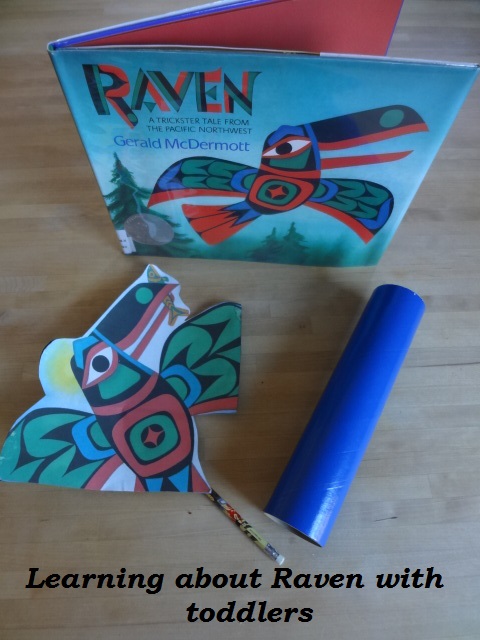
Outside of the exhibit I gave everyone a “spy glass” (in our case a mailing container but a paper towel roll would work just as well!) and showed them my Raven puppet (a scan of a book illustration).  The youngest, who wasn’t quite ready to use the spy glass, held the puppet and helped it “fly” into the exhibit, while everyone else used the spy glasses to find the sculpture of the Raven.  Once we found it, and had a chance to look at it and what it was holding, we settled in for a story.

I used the book “Raven: A Trickster Tale from the Pacific Northwest” by Gerald McDermott because of the really vivid illustrations. Since the text is a little dense I had some “cliff notes” taped to the back and read an abbreviated version.  The kids all helped guide me through the book pointing out the Sky Chief’s house, finding the box with the sun and pointing to where the sun was “stuck” in the sky at the end.

After the story, we used our spy glasses to look for the sun, moon and stars in the exhibit (there is a beautiful star display along the whole ceiling).  On their own initiative the kids went into the side exhibits and focused in on other elements they noticed, a rainbow, animals and elaborate clothing.  Giving kids something to look through can be great for focusing their attention AND giving them something to “touch” if there isn’t anything else available.

And, that was it. Very simple, very low impact for parents and kids alike….and that is ok.  I think the temptation with a museum lesson is to try to cram too much into it.  After all, you have a whole building full of unique artifacts!  There is a story to be told! But, that is too much. Scale it back, keep it simple and everyone will more fully appreciate what you are looking at.


Posted in Blog, Cabinet of Curiosities-Updates, Kids in Museums, Museum Education | Tagged , , , , | Leave a comment

Not QUITE a Twitter Convert…but Almost

I joined Twitter just over a year ago.  For almost that whole first year I just let my Facebook statuses run my Twitter page.  I felt like I had all I could handle just getting my Facebook page up and running and keeping on top of my programs.

Then, a few months ago, I decided if I was going to be on Twitter I should actually try to USE Twitter. Slowly, cautiously, and with lots of help from @erinblasco (American History) and @MsKelseyGamble (my sister) I started to learn the ropes.

I’m not quite there yet, I still find Twitter somewhat exhausting and full of expectations I don’t quite understand.  I don’t have a smartphone so I have to grab it in one big chunk on my computer…usually after the toddler is in bed. Still, I’m getting in on the fun. Let’s see, what do I like so far? I’ll even do this in short sentences in the spirit of Twitter!

* I like how it feels like a conversation, just with people I’ve maybe never met and might not meet.

* I like how it brings museum professionals together (we need each others support) and lets us spread good ideas, awesome programs and fun exhibits.

* I like that it proves the power of a group…just go back and look at #MuseumSelfie to see what an idea can become.

* I like that it makes “celebrities,” whether in the traditional term or just the celebrities of our profession, feel closer and like real people (I almost fell off my chair when @SoniaMManzano who plays “Maria” on Sesame Street responded to something I wrote)

Who knows if I’ll become a true Twitter convert.  I want to use it well, I want to be interesting/effective/helpful through my tweets…but can I? Suggestions and ideas are gratefully accepted!

Posted in Blog, Cabinet of Curiosities-Updates | Tagged , , , , , | Leave a comment

Quality vs. Quantity

JanSECA 018

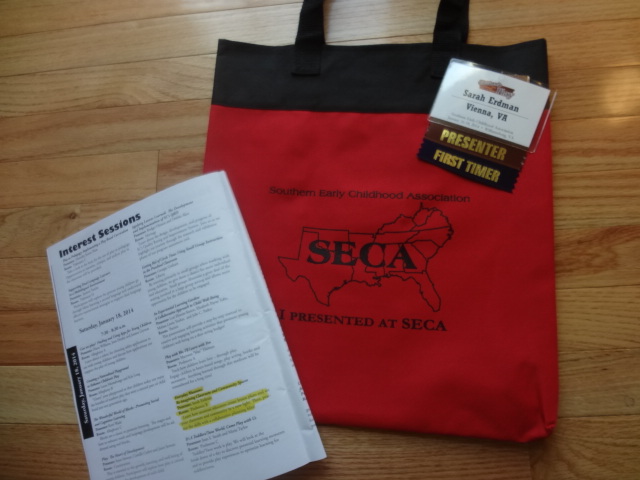
In January, I had the chance to present at the Southern Early Childhood Association’s (SECA) Regional Conference. SECA stretches from Virginia to Texas so it was no small potatoes to be chosen. I had prepared a presentation around “everyday museums” and how to use museum education theory in your classroom planning, so I was pretty excited.

Then, I got my presentation time… 7:30am on the last day of the conference. I totally understand that at conferences they try to fit in as many workshops as possible.  After all, educators have so little spare time for professional development and they want to take full advantage.  Plus, I was a new presenter talking about a niche topic. Still, that was early and I was nervous that it would be just me looking out at an empty room.

The morning of my presentation I set out my props, piled up my hand-outs and waited. When the presentation time officially started I had three attendees looking up at me, surprisingly alert and eager considering the hour!

And you know what…it was one of my favorite presentations yet. It was great for all the reasons you might think, smaller group means easier discussion, more flexible etc.  But, it was also great for me.  There was one classroom teacher, one person who worked for a state accreditation agency and one museum educator from an aquarium.  I would toss out the comment to get it started but then they ran with it, gave each other suggestions and helped me see what they really needed and wanted.

No one (including me) could hide behind the crowd and speak in generalities.  I had to think on my feet about specific ideas and suggestions and tie my big ideas into their real world scenarios. I feel like now I am more prepared for those packed conference rooms (fingers crossed…one day) and it won’t be as easy to forget the individual stories and needs behind each filled chair.

So, yet again, quality wins out over quantity.  I’m very grateful to those three women for helping me and I just hope that they came away with something as useful as they gave me!


Posted in Blog, Cabinet of Curiosities-Updates | Tagged , , , , , , , , | Leave a comment

Museum Visit Packing List

PackingforaMuseumVisitOne of the universal truths of having young kids is that you don’t travel light anymore. Even an overnight trip requires jamming the trunk full with the portable crib, stroller, diapers, and MAYBE a small duffel of clothes for the adults on the adventure!

But there is a reason we do it. If you have the “right” stuff for your particular small human then the likelihood of a successful and fun trip goes up 1000%. Some might call it superstition, but I’ve been on the trip where something has been left behind and it isn’t pretty. Parents take the motto “Be Prepared” to new and amazing heights.

It is with love and empathy for that parent (because I am that parent) that I’m writing today. I’ve had a few people tell me they WANT to take their infant or toddler to museums but “what do YOU bring?” So, below is my museum visit packing list, the things that helped me have a good day when my son was an infant and that keep us going now that he is a toddler. I’m sure you could do it with less, I’m sure some of you will bring more. This is just a suggestion based on what works for us.

Two things to remember especially if you are taking a stroller downtown. 1. The Metro is accessible, but keep an eye on elevator outages around the system. Also, aiming for pre/post commute time is better since the trains get REALLY crowded. 2. Many museums have a security screening when you go in.  They won’t forbid you to have snacks/water with you, but they will need to see inside all your bags.  Consider this when you are packing so you can more easily take things out for them to look at.

OK!  On to the main event…

Infant

So when my son was an infant the museum visit was basically an all day affair.  I’d leave just before his first nap (which was conveniently post rush hour) and take the Metro downtown.  The train was like a big swing and he would generally fall asleep.

I’d walk around the museum until he woke up and then find a place to feed and change him (for my running list of baby friendly areas in the museum you can read this post).  After that I’d spread out a blanket somewhere quiet and let him wiggle and look at what was around him.

Then, back in the stroller and either more walking around or heading home.  I’d generally pack my lunch so I could eat as we walked (outside of course…not in the museum!) and try to time it so he was ready to nap for the ride home.  They were long days, but no more stressful then being home or trying to do errands!

So, what did I bring?

  • Pre-loaded Metro card: I have a “SmarTrip Card” that means it has all the money on it and you just swipe through the gate.  I highly recommend even if you are just here for a long weekend. Much easier, saves you $1 on fare and is sturdier then a paper ticket.  Whatever you choose, make sure it is loaded up for the day so if you have to race to catch a train you aren’t caught without fare.
  • Stroller: I was a stroller person, if you prefer to wear your baby that is great too.  I like the stroller because it also serves as my “car” for carrying all the stuff I need.  I used the car seat insert but as soon as I could I switched to just the regular stroller.  He seemed happier in there, better able to look around etc.
  • Diaper Bag: Seems like a no-brainer right?  Make sure you have a change of clothes (I’ve forgotten and really regretted it) and anything you need for feeding baby (formula, nursing cover etc.). Obviously there are stores if you forget anything but they are a few blocks from the Mall, which doesn’t help if baby needs…it…NOW!
  • Blanket: I liked to get him out of the stroller and let him roll around and play a little.  You can easily find a quiet, out of the way spot and there is so much good stuff for them to look at!
  • Food: I would bring a water bottle and lunch/snacks.  I stashed them in the top of the stroller so I could munch as we walked around outside or have easy access to them in areas where I could eat.
  • Layers: D.C. is notorious for aggressive air conditioning/heating and equally miserable outside temperatures.  For both of us it was key to pack for extremes with layers!
  • IPod/Book: For the Metro if he was sleeping, or if I was walking around outside to eat/let him finish a nap
  • Toys: I always packed a few things for the Metro in case he got fussy
  • Camera: Once again…seems like a no-brainer but you definitely want this!

Toddler

Once my son hit the toddler stage (not just the walking but the…temperament…) our planning and packing changed slightly.  Now I head out right at 9:00am.  We miss the commuters (much easier then trying to jam a stroller onto a packed Metro car!) and are downtown when the museums open.

We have an hour or so to walk around the museum and see what we are interested in before I have to find food for us.  I generally pack for him (and frankly often for myself) and then get some “extras” at the cafeteria.  We eat lunch together, get changed and set and are heading back to the Metro around 12:00.

This hopefully means that I get him home and in his own crib for his 1:00pm naptime.  Obviously he can still stroller nap, but it is really better for both of us if he is back and I get a break!  The museum visits now are more tiring since he is more of an active participant, so making it home for nap works for us.

So, what do I bring for him now?

  • Pre-loaded Metro card: For all the reasons I stated above!
  • Stroller: I still bring the stroller, and my “good” one.  Umbrella strollers are lovely and light-weight, but I use the stroller as my luggage cart so I don’t have to carry anything.  Also, he is just more comfortable in there and if we do end up needing to nap-on-the-go, it works much better.
  • Diaper Bag: Just makes sense right?
  • Food: I bring lots of snacks and water for both of us.  It has saved us on a delayed Metro ride (I know, you aren’t supposed to eat on the train…it was a desperate time) and also covered me when I couldn’t find a good lunch option.
  • Layers: As I said before, the inside vs. outside temperatures can be pretty extreme
  • Books and Toys: I bring something for me just in CASE he falls asleep, and plenty of things for him.  I try to theme it to what we are going to see (“Go Dog Go” for the Transportation Hall etc.) and make sure it won’t bother other commuters/museum goers)
  • Camera: Trust me…you’ll want it!

See? The list isn’t that bad!  It is no more then you’d take for any day trip. Obviously you edit based on your family needs, but it is totally workable I promise!

Posted in Blog, Kids in Museums | Tagged , , , | 1 Comment

Am I Allowed to Have a Favorite Toy?

NBMAug2013 007

I had written a pretty snarky post about “unitasker toys” (riffing off of Alton Brown‘s strong dislike of single purpose kitchen tools)  You know the toys I mean, the ones that are only fun if you play with them the “right” way and soon end up in a heap on the playroom shelf.

As I re-read the post I realized I still stood by the concept, but not the tone.  It just felt too negative and petty.  Parents try so hard to do the right thing for their kids and these toys promise the moon in terms of fun and learning. Instead of bashing their efforts, we can celebrate awesome toys that are out there!  Sound good?

If you told me that I was going to be stuck on a deserted island with a kid and could only bring three things I can tell you without hesitation what they would be

* Books
* Crayons/Paper (I know…technically two things but they go together!)
* Blocks

I love blocks, I think they are one of the best toys on the market and have the ability to engage kids from infant through…well…I still like them so there you go. They are versatile, they don’t have to be expensive, they can be used alone or with a group and they support all kinds of important development like planning, hand-eye coordination and resilience when things don’t work out like you planned.

Plus, for us parents who sometimes are stumped on how to play with our kids blocks have a low barrier of entry. (Side note, its ok to sometimes not know how to play, it is a learning curve for us grown-ups. Ask my younger sister about how my Barbies would always go take “naps” because I’d run out of ideas….)

I could go on and on, and I often do.  My supervisor at the American History museum jokingly (I hope) called me a “block pusher” because I kept talking about how they should be included in our new kids exhibit.

So, what blocks do I like?  Well, when my son was little he used these “squeeze blocks” to learn to grip (and of course chew!).  They were what inspired him to crawl, we would stack them up and he would crawl over to knock them down!

Plain old “unit blocks” can’t be beat for sheer “scope for the imagination” (to quote Anne Shirley) and “stacking blocks” are a fun twist.

As kids get older, Duplos and Legos become more and more fun to use (use your judgement for when your child is old enough for the smaller Legos).  A splurge in price are “Magna-Tiles” but they are amazingly fun and let kids build out and up in ways that regular blocks don’t.  We got some for our friend’s little girl when she turned three and she and all the adults in the room couldn’t put them down!

You don’t have to give kids instructions on how to use blocks, another thing I love about them.  However, if it starts to get a little stale you can make some small changes to keep it fresh.  I have a whole Pinterest board about blocks that you are welcome to check out, but here are a few ideas to get you going

* Glue photos onto blocks.  You can do animals, family photos, objects etc.

* Paint blocks with chalkboard paint so kids can create their own decorations

* Create blocks out of unusual materials like cut up pool noodles or cut up sponges.  Bonus is these are quiet and light so they travel well!

* Add “props” to the box of blocks.  Maybe one week it is trucks, animals or little people.  Another week it could be natural materials like pine-cones and twigs

* Incorporate books into your block play!  “Block City” by Robert Louis Stevenson is a great one.  Or use favorite books and have them build things to help illustrate it.

* To create “life size” blocks I saved the diaper boxes as we finished with them.  Not as pretty as the “brick” cardboard blocks but much less expensive!

*If you have space, let your child leave up their block creation for a while.  They can go back and add to it and I bet they will love showing it off when people come by!

Yes, they may not be the fanciest or the most tech-forward toy on the market but there is a reason that there are five different kind of blocks in the “National Toy Hall of Fame!”  I definitely encourage you to dig out the blocks buried in the toy bins (or look around your house for things you can use as blocks!) and see what your kids create with them.

Oh!  Also, if you are in the D.C. area you should DEFINITELY go to the National Building Museum and check out their “Play Work Build” exhibit.  Blocks on a whole different level!

Posted in Blog, Museum Fun at Home | Tagged , , , , , , , , | Leave a comment

Strength in Numbers

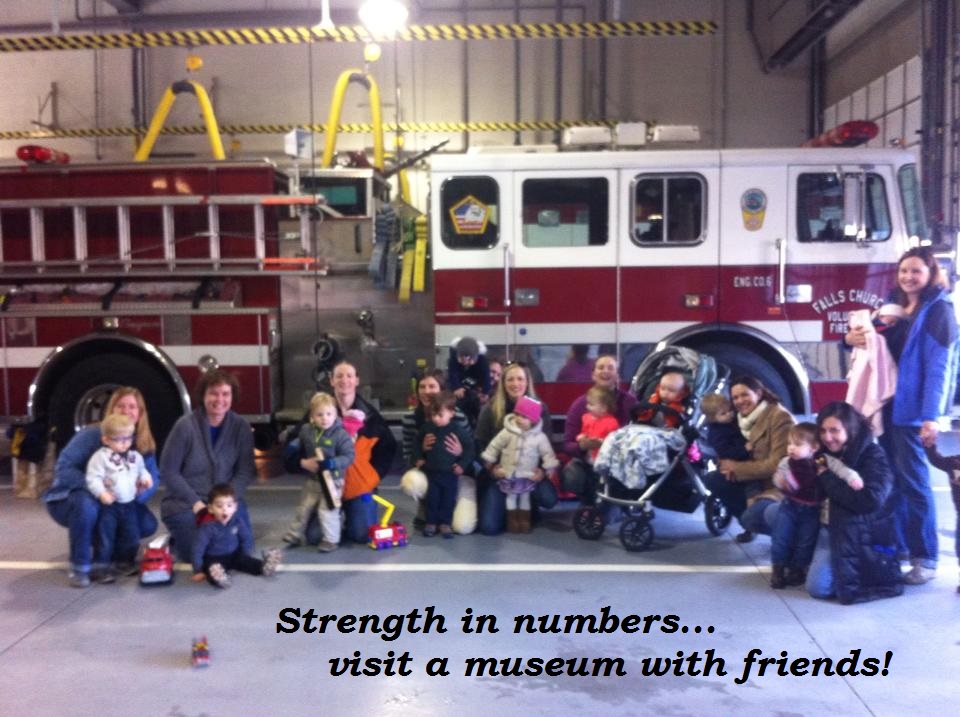
MuseumswithFriendsMuseums have a reputation of being a place for solitary reflection.  It seems like you are supposed to go, wander, read and observe and be hushed by the momentousness of what you are seeing.  Sure that can be great, sometimes, but I don’t think I could make a steady diet of it.  Some of my best museum visits have been the ones where you have the “Oh WOW!” moment and get to share it with someone.

Now that I’m a Mom it’s a moot point, very few of my museum visits are solitary.  That’s ok, I’m finding that I really like it that way! You still are seeing things through your own eyes, but you also get the benefit of someone else’s interpretation…even if (especially if?) that someone is 1 ½ and just says “Wow! Car! Car! Car!” when they walk into the exhibit.

Embracing this idea of strength in numbers can be really satisfying, whether you are gearing up for a first-ever visit or are a veteran museum-goer trying to shake things up a bit.  Suddenly a lot of the obstacles to going (getting there, going to the bathroom, herding kids past the gift shop) are spread out among multiple people and don’t all fall to you.  If things start to go sour, I’ve written about that before, then you have a sympathetic person who can help you get through it.

Beyond logistics, you and the kids have someone to share the experience with.  Maybe they’ve got a favorite artwork that you’ve never visited, or can share a funny story that brings the exhibit to life. Or, your kids have something they can share and get that glow of being the “expert” and helping someone else.

I’ve been lucky enough to have three different ways to have company when I visit the museum.  Thankfully, the “categories” are easy enough for you to replicate.

The Like Minded Friend: I have a friend that I got close to when we both worked at the Smithsonian Early Enrichment Center.  We were museum people who became preschool teachers and then we both had babies a few months apart.  She is the one I can call when I want to drag my son down to the National Mall for a museum visit.

With just the two adults and two babies we are more “agile” and can swoop in and see an exhibit and follow the lead of the kiddos for how long we can stay.  She is totally sympathetic to meltdowns and willing to go with the flow.  I bet you have that friend.  Think of who you would call to go to an indoor playground on a teacher-work day, or to a kid’s concert of the band you can’t stand.  That is the person you want with you.  Someone who is relaxed and flexible but up for an adventure.

The Playgroup: Since my son was a few months old I have been part of a playgroup.  This lovely bunch of women has seen each other through illnesses, food and sleep strikes, birthdays and every milestone in between. Normally, we meet at each other’s houses so the kids can play but now that they are getting older (and we are going nuts being stuck inside in bad weather) we’ve started branching out.

 These visits are more like “field trips.”  When someone gets an inspiration they set up the details and invite everyone to come along.  One woman’s husband is a volunteer fire-fighter, so she got us a “tour” of the firehouse.  This meant that for a glorious hour, my son was able to wander the garage of the firehouse and get as close to the trucks as he wanted. We had all brought along a fire truck toy and we just let the kids do their thing. It was little to no pressure for us and flexible for those with nap schedules or second babies in tow.  Another woman found a kid’s theater performance (from Art on the Horizon) that she suggested we try out.  I am bringing everyone to Air and Space.  I’ve got a book about planes to share…and that is it.  These are meant to be low key for the planner and the “attendees” and just give the kids a chance to experience something new.

The Museum Centered Playgroup: Through my work at the preschool and in the museums, I met a lot of incredibly talented museum educators.  Many of these are women (just the way of the field currently) and many of these women are now proud Moms themselves. One incredible go-getter pulled together all of her museum educator/Mom friends and formed the “Little Muses,” a playgroup dedicated  not only to getting the kids out into the museum, but also to letting the Moms exercise their educator brains.

 In this group, we only meet once a month and everyone takes turns planning a museum visit.  The idea is to have about 30minutes (our kids are young) with a book, an activity and a chance to see the space.  The planner sets up everything and whoever is able to make it, goes. Sometimes we meet on weekends (and families are welcome) and other times we meet on the weekdays.  Recent visits have included the Little Golden Books exhibit at American History, a nature preserve to learn about owls and visiting the trains at the US Botanic Gardens. The visits themselves are relaxed and flexible, but there is a more structured “lesson” that takes planning, something that is fun for us.

Do any of these “categories” sound familiar? If you can check off even one of them then you are ready to head to a museum together. Just three tips:

  1. Have one person take charge of planning the where/when. Group consensus can be hard and you won’t be able to meet everyone’s needs time wise
  2. If you are new to museums, don’t worry about having a plan. Just go to visit something that strikes your kid’s interest or see a particular program/performance
  3. Treat it like any other travel day and find out in advance any costs, restrictions on bringing food or strollers or other things that make a parent’s life easier or more difficult

Most important, just do it!  You will be surprised how much your child AND you benefit from the opportunity to explore and learn with friends. Enjoy!

Posted in Blog, Kids in Museums | Tagged , , , , | 1 Comment

Everyday Museums

EverydayMuseums_PostOfficeEverydayMuseums_Garden

I remain an unashamed advocate of taking kids to museums (babies, toddlers, big kids….all kids).  If you are feeling nervous because you aren’t sure if they will like it or don’t know what to do when you are there…that is ok!  Comment here, post to Facebook or Twitter and I will help you through it.  I don’t want those reasons to stop you from going.

However, I do realize that some obstacles really are deal breakers. Maybe you don’t live close to a museum, maybe the ones near you are expensive or some other obstacle really makes it impractical to go frequently. If that is the case, you can still give your family the museum “experience” in your everyday life.

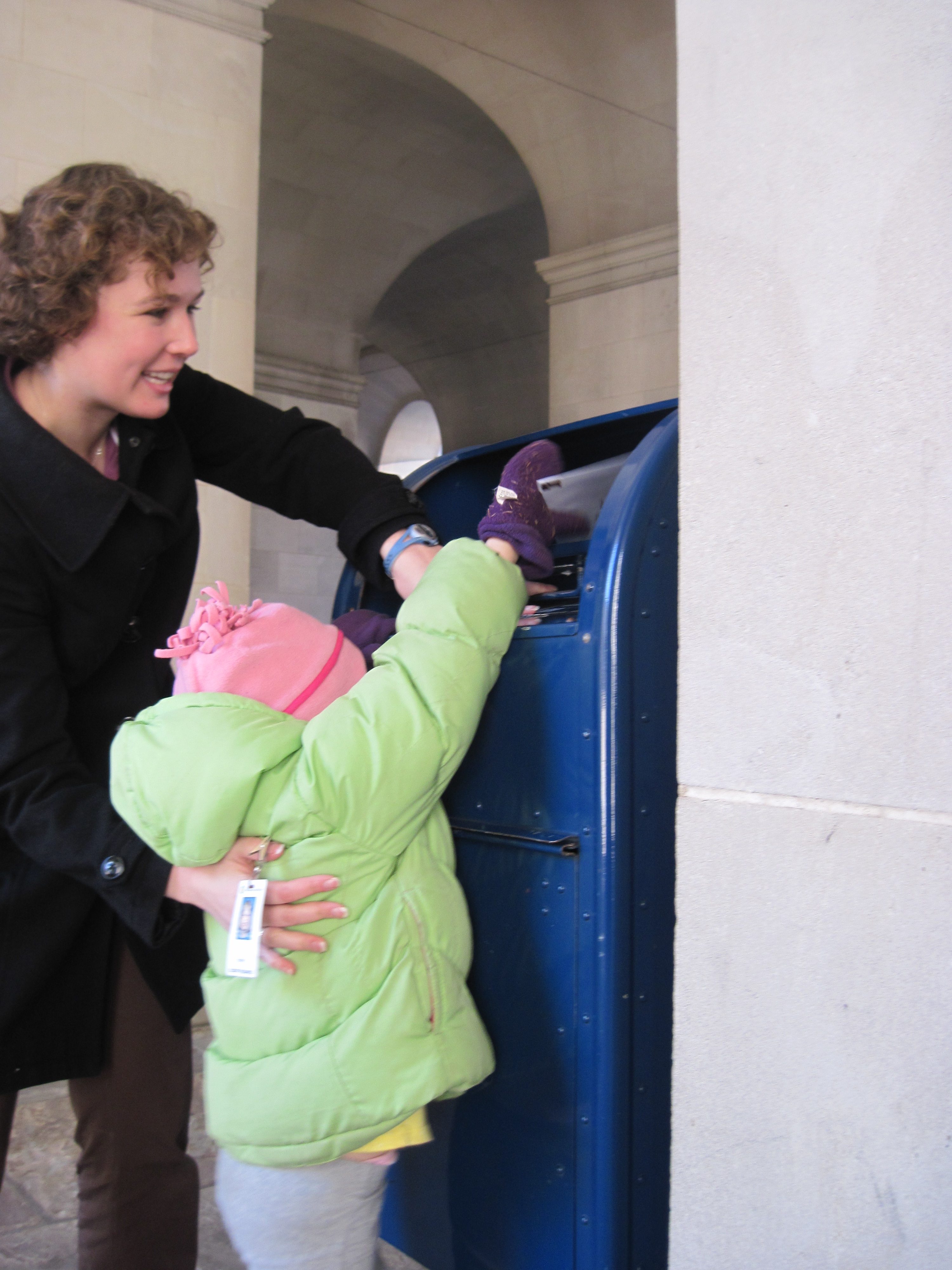
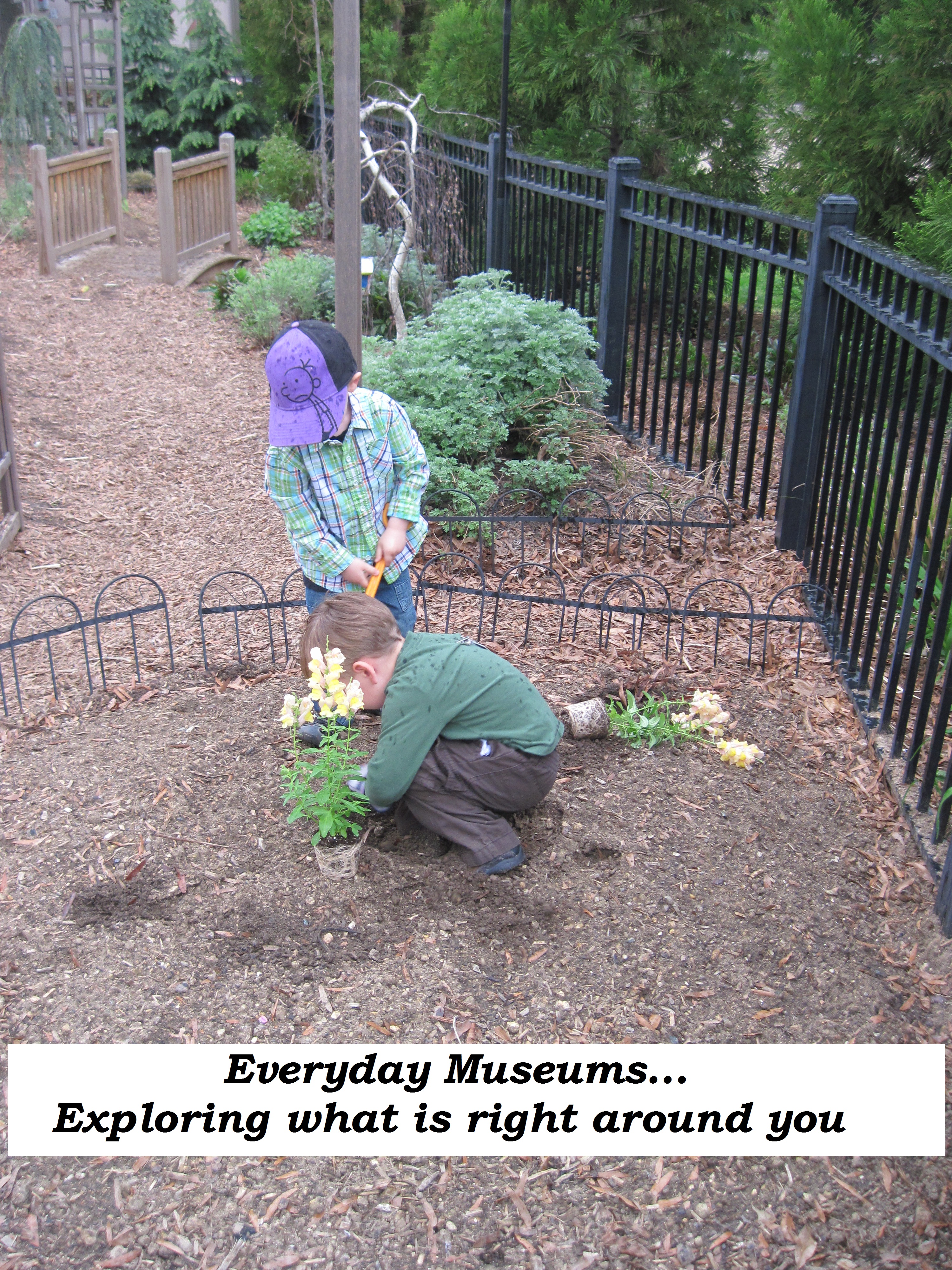
Draw a mental map of your neighborhood.  Is there any public art? Accessible nature (whether its a single tree or a mountain you can climb)? Buildings with really unique architecture?  Right there you have a substitute for an  art museum, natural history museum and history museum.

Think about how you act in a museum. Mostly, it is about observation.  You look at stuff, point out things to each other, debate the purpose of something you don’t recognize, draw attention to an object.  All of this you can do at the Post Office, grocery store or library.!

You can even give them a hands-on/interactive learning experience in your “everyday museum.”  My friend David, who inspired this post, sent me a really good write-up of the adventures he and his daughter have at the hardware store.

“So I have seen your curiosities column, and I have an idea for you (are you taking ideas??) My idea/suggestion is the adventures at Home Depot/Lowes/etc. I know it isn’t classy, but just wait, hear me out.

I take A to home stores for 4 reasons: 1. She is loud, no matter where you are in the house, so the only way to have a quiet house is to remove A. 2. Unlike most stores, home stores are not marketed to kids, so they aren’t always grabbing for flashy little toys. 3. At least up here, we haven’t had suitable weather to go outside for weeks, and toddlers cooped up for that long is a bad thing and home stores have big open areas to run and walk. 4. I always have projects I need to go to the store for.

We usually go early in the morning, when we really won’t disturb anyone. She can run around. When she picks something up, there is little risk of “you broke it, you bought it”. And there are tons of fun things to learn. There are textures: tile, carpet, wood. Colors in paint and carpet. Windows that crank, shades that pull, things to step up into.”

David, not only do I think it is classy…but it sounds like fun! Yes, museums definitely provide something that one-of-a-kind, but that doesn’t mean you can’t create a meaningful, museum-like experience no matter what your circumstances are.

Now that this is on my mind, I will try to highlight some “everyday museum” ideas as they come up in my life.I’d also love to hear about yours!

***If you are a teacher, this is something you can really apply in your classroom! I’ve done some workshops  at conferences and in preschools on applying museum education strategies in the classroom and would be happy to come to you.  Also, if you are going to the 2014 Southern Early Childhood Conference, come to my session on it (Everyday Museums- 7:30am on Saturday…I didn’t pick the time). ***

Posted in Blog, Museum Fun at Home | Tagged , , , , , | Leave a comment

Eric Carle, Keith Haring and Teachable Moments

Dec2 014

In my definition, a “teachable moments” are the unexpected lessons that come up in the day that you have to grab at…even if the don’t ‘t fit the curriculum.  These lessons can be the strongest and are often more about people then facts. Most of my teachable moments have been the ones that I see and then guide the kids to, but not yesterday.

I was approached by a Fairfax Library to create a program around Eric Carle’s book “The Artist Who Painted a Blue Horse.”  Like most of Carle’s books the illustrations are vibrant and the text approachable.  But, the story behind WHY he wrote it was harder to navigate.  As he says on his website

“My new book, The Artist Who Painted a Blue Horse, is an homage to the Expressionist painter Franz Marc. In WW11 Germany, my high school teacher Herr Krauss introduced me to abstract and Expressionist art during a time when works such as these had been banned. The so-called “degenerate art,” paintings of modern and expressionistic art my teacher showed me were unlike anything I had been exposed to before. And really this experience changed my life, though I didn’t know it at the time.”

So my main task was helping 6-12 year olds understand Expressionist art and oppression in WWII…no problem.  Although I explained to them the history of the book we spent most of our time focusing on whether there was such a thing as “right” art and “wrong” art.  What we landed on was the idea that if someone told you art was “wrong” what they probably really meant is that it was different then how they would do it.

Dec2 004Dec2 005

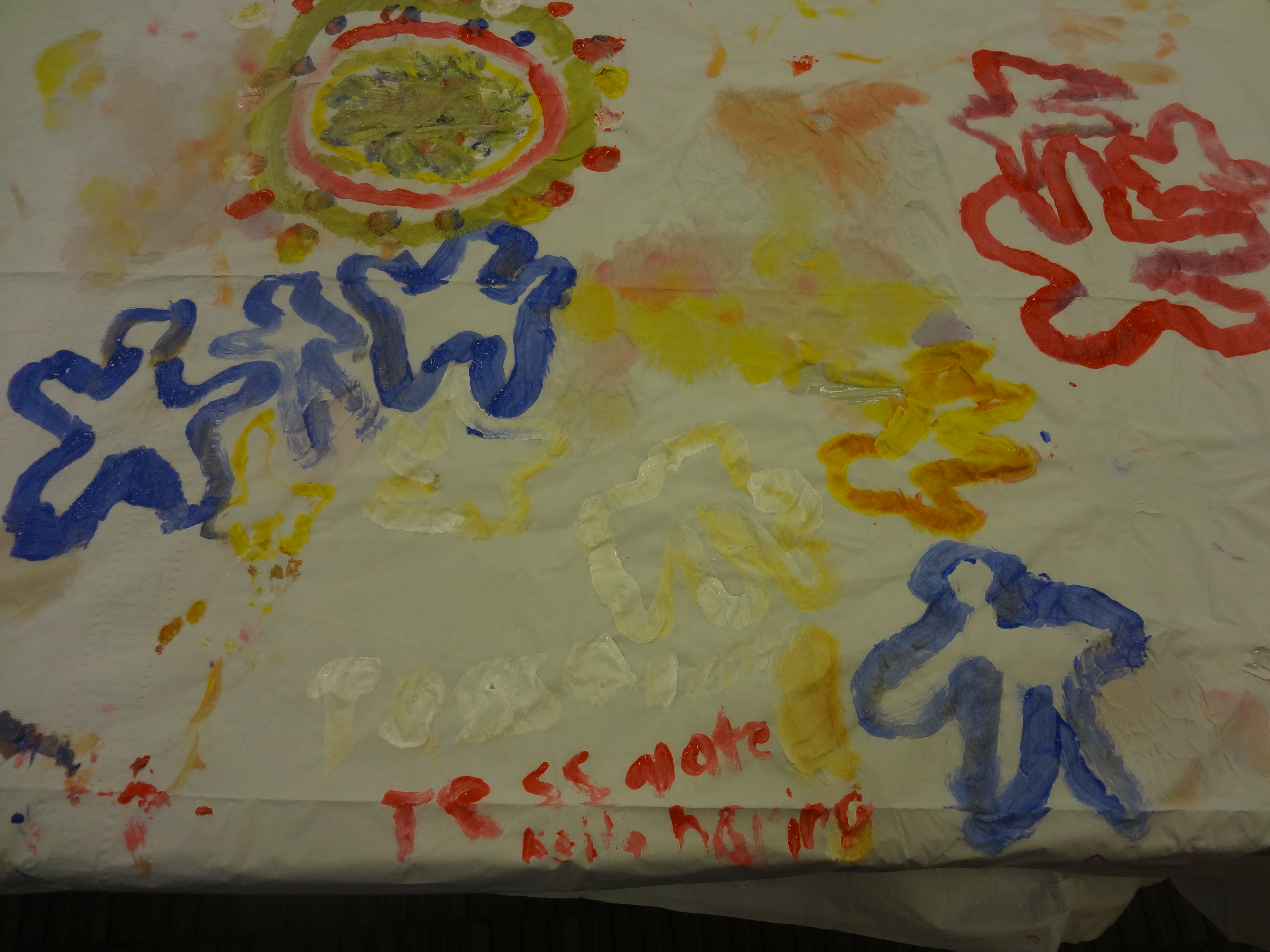
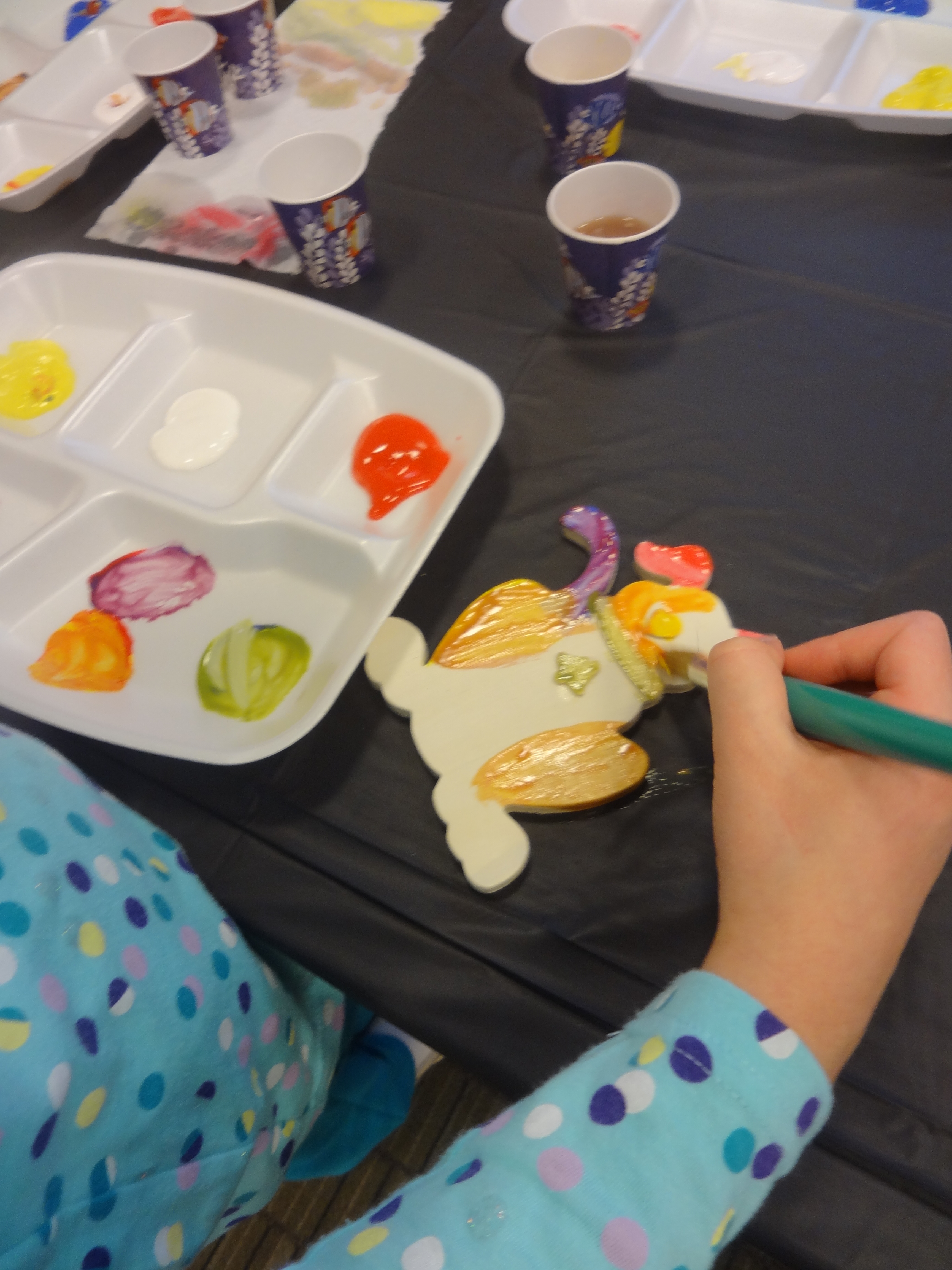
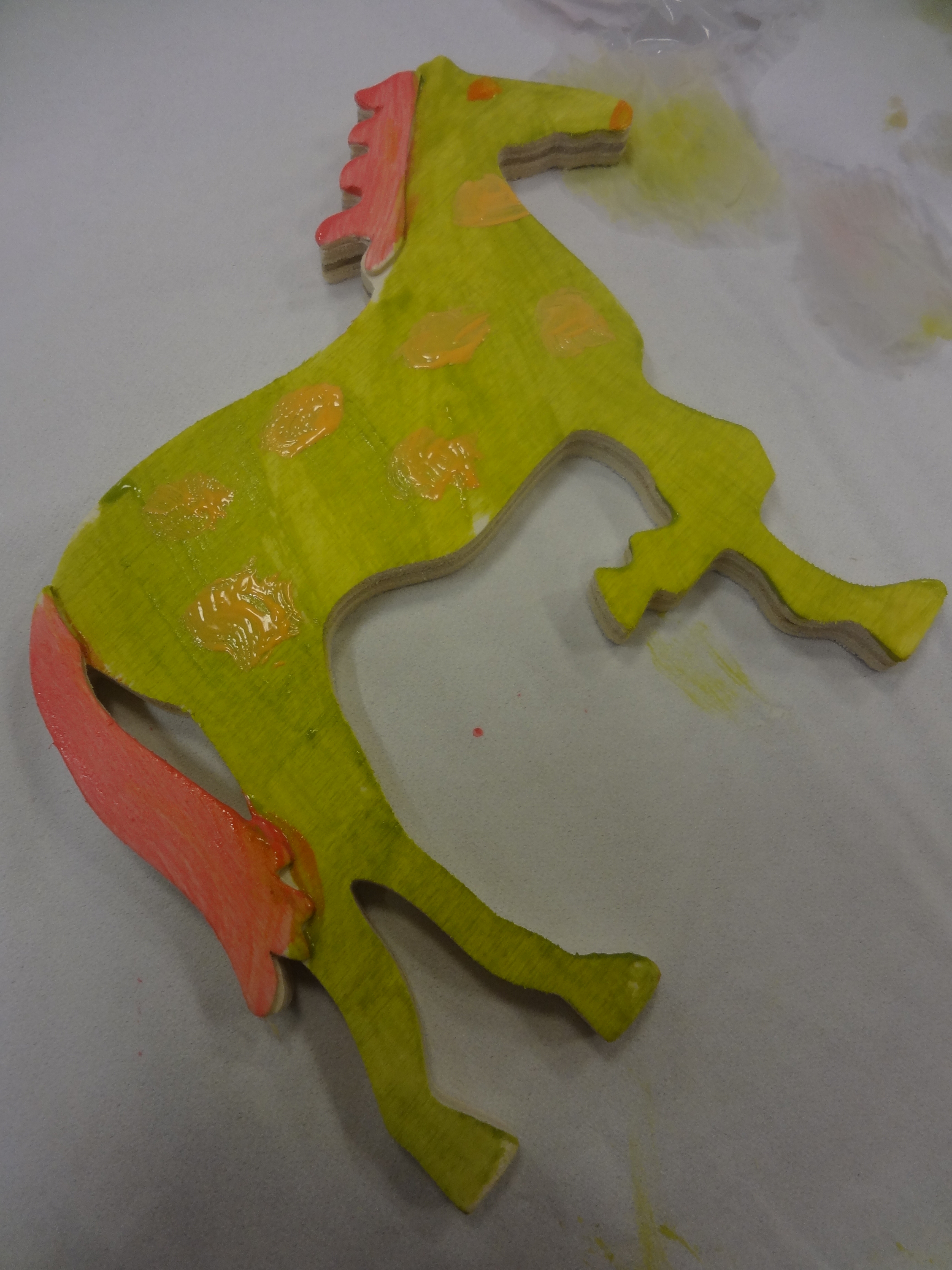
For the last activity I turned them loose with tempera paints and wooden animal cutouts and they could paint them however they wanted.  For 30minutes the room was nearly silent as they mixed colors and carefully painted.  As they finished they were given a choice to go back and play with the playdough we’d used at the beginning, or paint on the tablecloths. (Hey, it was a last minute inspiration to help fill time!)

As I circulated around I noticed one 6th grade boy who was concentrating so hard on the paint he was brushing onto the tablecloth. I asked him to tell me about what he was painting, although he hadn’t spoken a word to me at all during our group time earlier.  Now, however, the words started pouring out as he told me all about his art class and the study they had done on Keith Haring.  He told me about how Haring got his start, the style and meaning of his work and even the definition of “tessellation,” which he demonstrated for me in paint.  As he talked he slowly filled the table with his interpretation of a Haring piece.

I will admit, I had never heard Keith Haring’s name, but you can bet that as soon as I was home I was looking him up and immersing myself in images of his work.  The story that the boy had told me was so complete that the official website could only fill me in on Haring’s personal life. As I read I was wishing I knew who his teacher was so I could tell them what an impact they had clearly made on their student.

There were a lot of wonderful moments in that program, but the teachable moment was definitely one that I was given. It reinforced my belief  that age appropriate does not mean talking down to kids and reminded me of how alive kid’s minds are and what capacity they have for learning and absorbing even very difficult material.

TeachableMoments

Posted in Blog, Cabinet of Curiosities-Updates, Museum Fun at Home | Tagged , , , , | Leave a comment

When the Kids Become the Critics

Asking kids to review an exhibit helps them engage in a new wayEveryone is a critic, isn’t that how the phrase goes? When it comes to kids and museums…this isn’t a bad thing!  Empowering kids to become museum exhibit critics can get them excited about a topic or a visit that maybe had them dragging their feet initially.

The Smithsonian Early Enrichment Center (a preschool based at the Smithsonian Institution) put this idea into practice when it had the Kindergarten class review the Little Golden Books exhibit at the American History museum.  I tagged along to write up what happened, and “translate” some of the ideas and lessons into ones that are easier for families to try.

The question of what kids really get out of a museum visit is something that parents, teachers, museum professionals, and even this blog have been talking about. Many people feel like they do get a lot out of a museum visit—but might not be able to articulate exactly what. Others feel like it is important to go but maybe aren’t as convinced that their younger children are actually learning something.

A kindergarten class visit to the Little Golden Books exhibition recently offered proof of the benefits of museum visits for kids. They arrived charged with a very important mission: review and evaluate the exhibition….continue reading

Posted in Blog, Early Childhood Education, Kids in Museums | Tagged , , , , | 2 Comments