Sing Out Loud!

Songs for cleaning up, getting dressed and calming downIt didn’t take me long in the preschool classroom to learn the power of song.  Don’t get me wrong, I am not a singer, but that didn’t seem to matter.  I could repeat the same request until I was blue in the face, and no one would pay attention, but the minute I put those words to a tune…then we were getting somewhere!

Most of the Early Childhood Educators I’ve met seem to have learned the power of songs and rhymes, but a lot of Museum Educators don’t seem to use it regularly.  I promise, it will make your programs with young kids so much easier!  Organizing yourself with a “welcome song” to open with, a song or rhyme in the middle and a “goodbye song” at the end give you such a nice package you can build programs off of.  Yes, I completely understand it can feel very silly (especially if you are in the galleries with lots of visitors), but the kids won’t judge you…I promise!

It takes a little practice to get comfortable, but once you have a few things to use regularly you will find you can make up songs for any occasion.  I will sometimes use a base tune I know (Twinkle Twinkle, Row Row Row Your Boat) and then add in the words I need.  They aren’t always the best rhymes, but it gets the job done.  Plus, I find I get a little less frustrated singing something over and over again then asking in my”nice voice.”

If you can’t come up with the song you need, just turn to Google!  The internet is full of songs that teachers use in the classroom.  If you just search for the topic you are looking for “song for kids” I’m sure you’ll get a dozen options.

Parents, if you haven’t tried this yet, it works pretty well for you too.  My son kicks and screams any time we need to get boots on him, but my husband sings him a silly little song he made up (about socks-les going on feet-zles) and we can just slide the boots right on.

To get your started, I’m copying down a few of the songs I’ve been using recently.  Most of these I use with my son (1.5yr old) and I used to use with my 3-5yr old preschool classes. If I think of others I will add them in!

Before Crossing the Street
Stop, look and listen
Before you cross the street
Use your eyes and use your ears
and then you use your feet!

Washing Your hands
(To the Tune of “Row Row Your Boat” Written by the amazing Ms. Brake at the Smithsonian Early Enrichment Center)

Wash, wash, wash your hands
Wash them every day
When you rub the soap around
You wash the germs away!

Getting Dressed (from Babybug)
Over your head and down your nose
Peek-a-boo!  You’re in your clothes

Putting on Mittens (from Babybug)
Thumb in the thumb place
Fingers all together
This is the song we sing
in mitten weather

Welcome Song or Before a Meal/Snack
(from Smithsonian Early Enrichment Center)

Hands UP!
Open, shut them
Open, shut them
Give a little clap clap clap
Open, shut them
Open, shut them
Lay them in your lap lap lap
Creep them, crawl them
Right up to your chin chin chin
Open wide your little mouth
But do not let them in!

Settling after playtime (from Babybug)
Hop, hop, stop!
Hop, hop, stop!
Run a little
Run a little
Sit down, plop!
Posted in Blog, Early Childhood Education, Museum Education, Museum Fun at Home | Tagged , , | 1 Comment

New Posts for American History, NAEYC and Kid Trips!

I’ve been lucky enough to find a few soapboxes where I can talk about young children and museums.  This week, I had three pieces published all within a few days of each other!

For American History, a follow up on my piece about taking your toddler to a museum…this time focusing on babies!

On the “For Families” site of the National Association for the Education of Young Children a science focused post on bathtime.

Finally, for Kid Trips, a guide to picking a museum based on your child’s interest.

Enjoy and let me know what you think!


Posted in Blog, Early Childhood Education, Kids in Museums, Museum Fun at Home | Tagged , , , , , | Leave a comment

Toddler Approved Museum Activities/What Do You DO Anyway?

I always have a little trouble explaining what Cabinet of Curiosities is all about.  If someone catches me off guard I usually say “Well, I really feel strongly that young children belong in museums.  So, I do programs for kids like you would find in a museum…I just bring them to wherever the kids are!” All true statements, but what does it mean?

Museums, whether they are are, history or science, center around the objects.  These tangible items bring to life the story that the museum is telling.   To me, this is why they are perfect for young children who are such concrete thinkers.  When I am not at a museum, then it is up to me to supply the objects and give the kids the context for the story like they would find at the museum.  Wait, did that make it any clearer?

I think that you need a few examples!  Here are some “toddler approved” activities that I have done either with me son or with one of the groups I work with. All of them could be done in a museum, but none of them were.

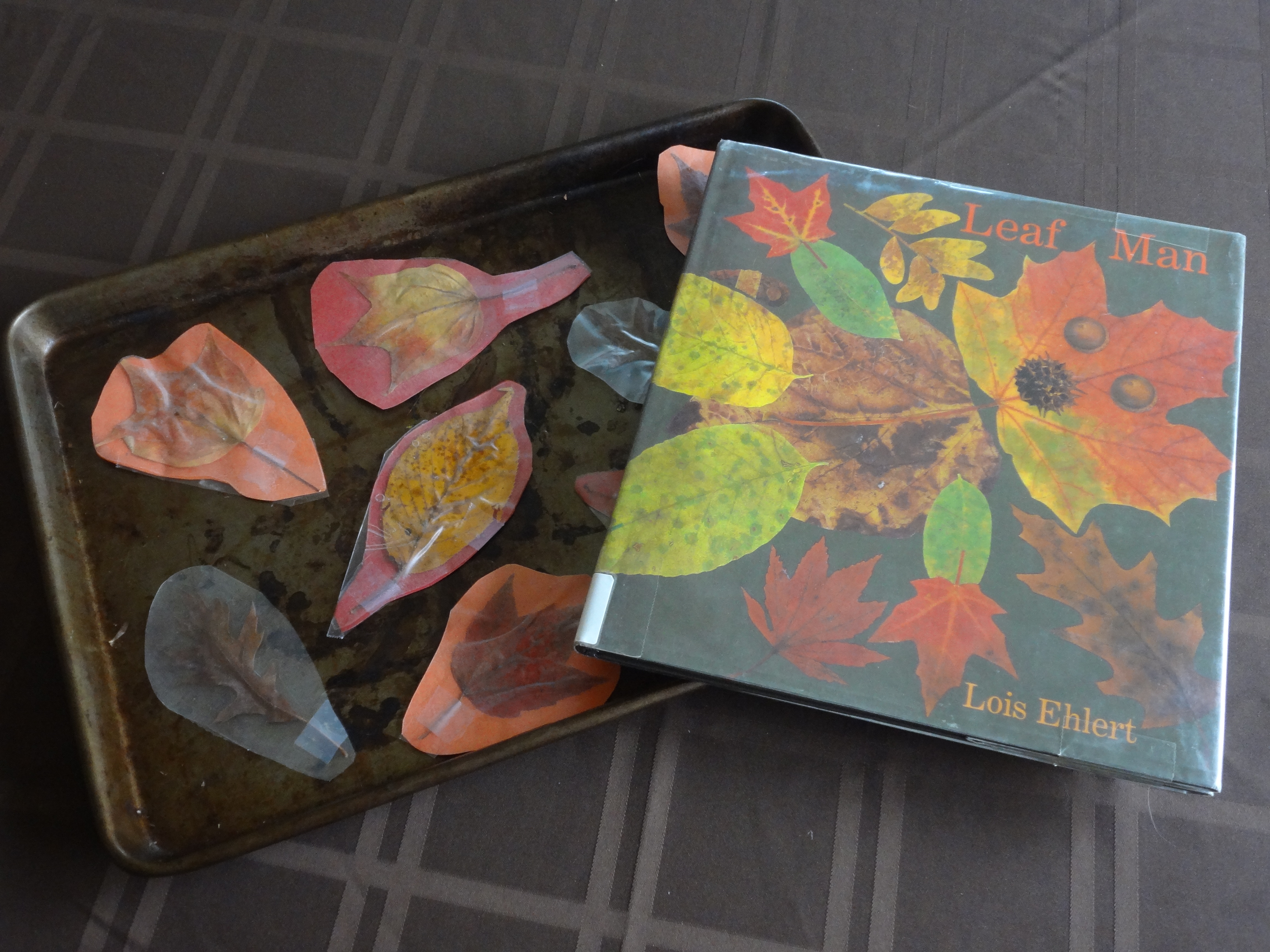
ActivitiesforBlog 004For my toddler class at Cub Run Rec Center, we spent a morning singing and reading about “Fall.” Since the Rec Center probably would have squawked if I brought in a pile of leaves for the kids to jump in, we scaled it back a bit. I laminated some colorful fall leaves and put magnets on the back.  Then, when we read “Leaf Man” by Lois Ehlert, the kids could create their own leaf man on the cookie sheets.

ActivitiesforBlog 002My son has gotten really into colors and what they are called. For the times when paint and color mixing isn’t an option, I created a set of color cards for him.  I went to my favorite home improvement store and picked out one for each color (I spend a considerable amount of money there so I didn’t feel too guilty taking six swatches).

I then stuck a magnet on the back of each and put them on the fridge.  Now, he can mix and match them himself and I can also ask for certain colors. To go along with it we read “White Rabbit’s Color Book” which is one of my favorites.

ActivitiesforBlog 003Ask almost any preschool teacher and they will extoll the virtues of the felt board.  They can be used by the kids themselves or to help teachers tell a story.  They don’t take up a ton of space and are easy to create (even for the artistically challenged like myself).

For my train obsessed little boy, I cut out the cars from Donald Crews’ “Freight Train.”  Now as we read he can get the pieces and we can do more color recognition and counting. With a group you could have the kids add to the board as they see their train car come up in the story.

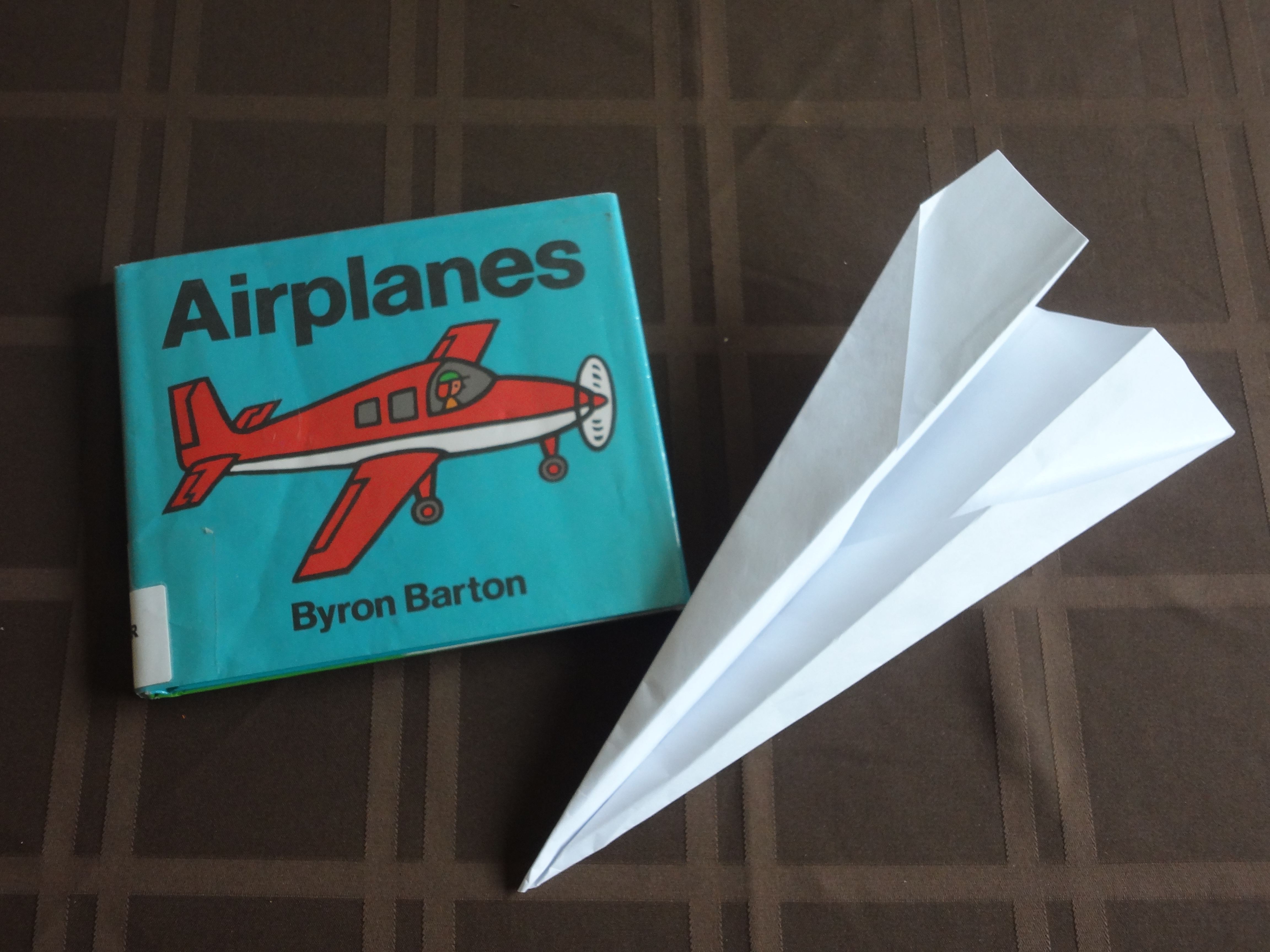
ActivitiesforBlog 001A friend of mine recently started a group for museum educators who are also now parents (more on that in another post). We take turns hosting a play-date for everyone where we present a little story-time and activity.  Sometimes it is at a museum but it doesn’t have to be. For my month, I took all the kids to Reagan National Airport.

They have a “historic lobby” outside of security that has huge windows overlooking the runway and plenty of space for the kids to run around without getting in the way of travelers).  I brought copies of “Airplanes” by Byron Barton and a selection of simple paper airplanes (since these are toddlers I pre-folded them).  The kids could read with me or their parents and throw the airplanes around the lobby.

So there you go, four examples of the kind of thing we do here.  In each I try to be thoughtful about an age appropriate activity AND incorporate a tangible object so help the kids grasp what we are learning about. Hopefully that was clearer then my attempts to explain it earlier!

Oh!  Side note, as you can see the other reason why “museum style programs” are so perfect for spaces like libraries is because museums have strict rules about making a mess.  If I tried to bring glue and glitter into the National Gallery of Art, I would be thrown out on my ear! While I wholly approve of messy projects in their proper place (see my other post on bubbles) , it can be comforting to the parents, teachers and librarians if my projects treat the space we are in with the same kind of respect the museum demands.

Posted in Blog, Cabinet of Curiosities-Updates, Early Childhood Education, Museum Fun at Home | Tagged , , , , , | Leave a comment

Bubbles!

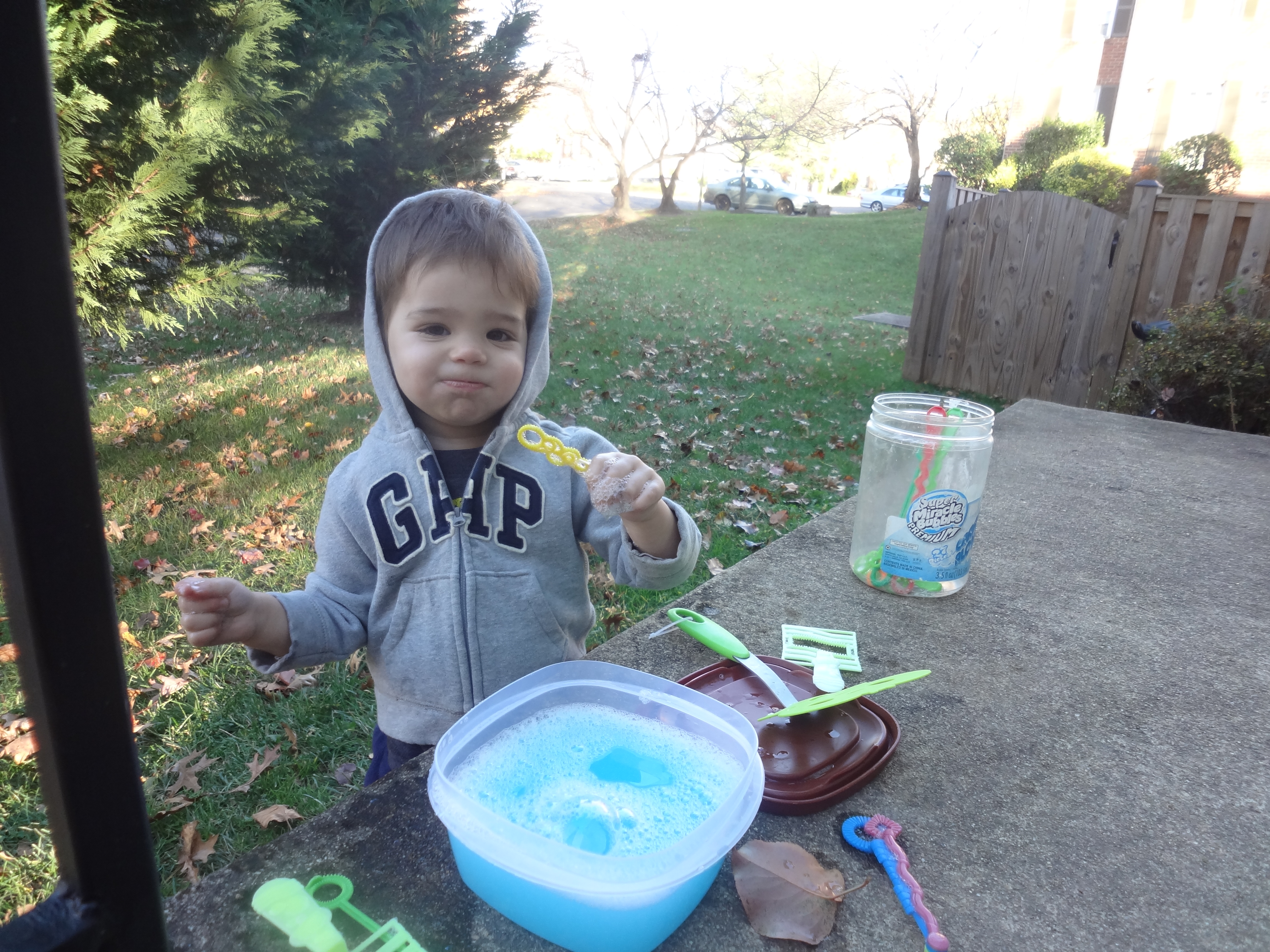
Nov18 028I haven’t met kid yet who doesn’t like bubbles. Even if they don’t want to TOUCH it themselves they will usually get a kick out of chasing and popping them.  What I like about bubbles is that it is so easy to weave in science lessons that kids from toddlers on up can appreciate.

At the Northern Virginia Hebrew Congregation Preschool I used bubbles to help the kids grasp the idea of a scientific method.   I broke down the concept into four easy steps:

* Ask a question

* Make a guess

*Test it out

* See what happens!

Then, the scientists helped me solve the big question… are bubbles always round? We created our own crazy shaped bubble blowers out of pipe cleaners (and I brought a bunch of cookie cutters in funny shapes) and then tested out our guess. I won’t ruin the surprise and tell you what we discovered !

Even the toddlers got in on the fun.  For them, we sang songs and used felt bubbles to explore the shape of bubbles and talk about circles.  Then we blew lots of bubbles and had fun popping them!

Since I had three classes to bring bubble soap for, I tried to make my own.  I’m not totally thrilled with how it turned out (it wouldn’t make giant bubbles like it promised) but it certainly was easy to make and did a nice job for regular bubbles.  I’ll keep tweaking it and get back to you on any improvements.

Posted in Blog, Cabinet of Curiosities-Updates, Early Childhood Education, Museum Fun at Home | Tagged , , , | Leave a comment

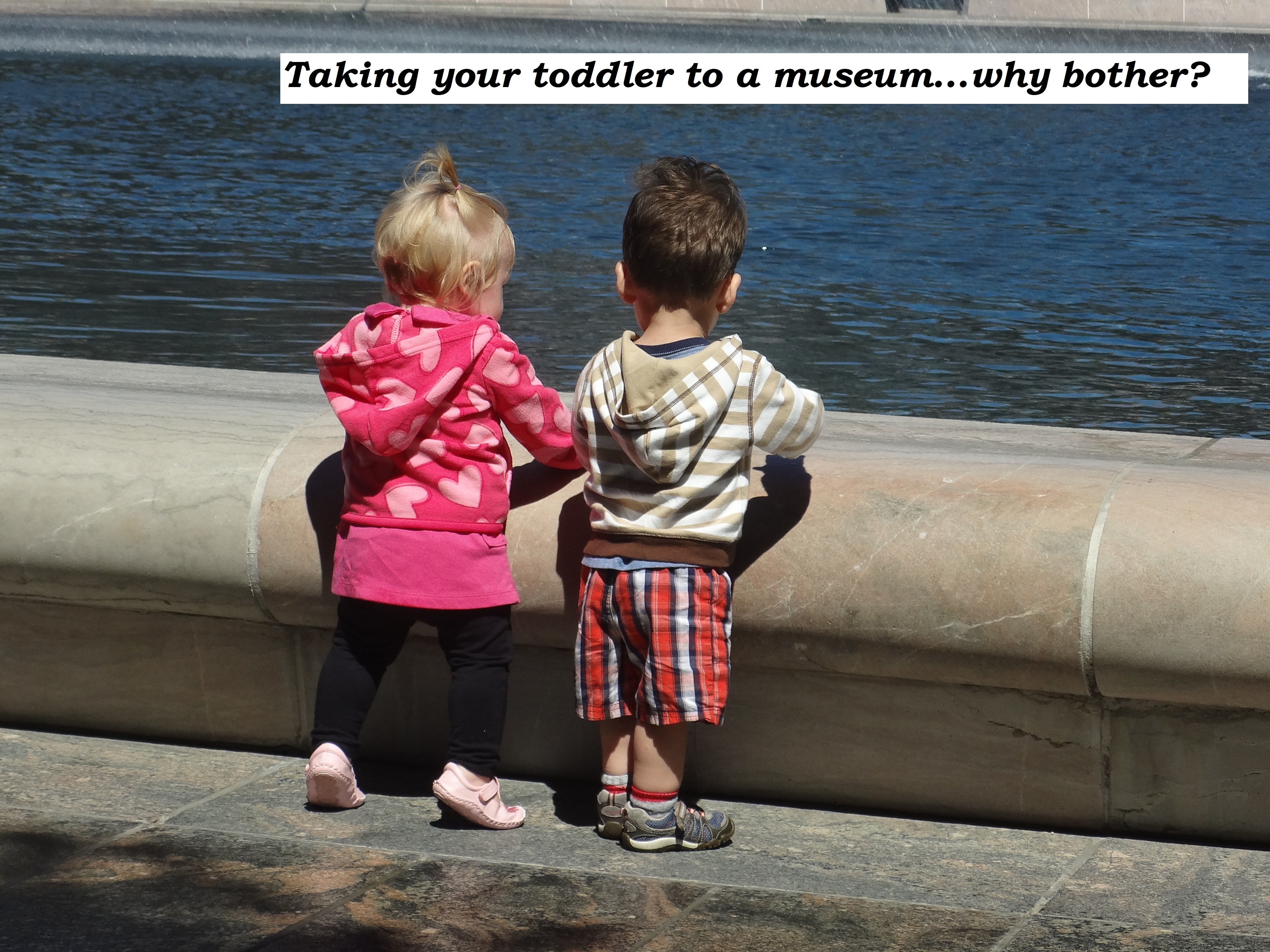
Taking a Toddler to the Museum: Why Bother? (New Post on “O Say Can You See?”)

Why should you bother to take your toddler to a museumFrom the last post I put up (When a Museum Visit Goes Wrong), you might think that taking your toddler to the museum isn’t worth the effort.  Nothing could be further from the truth!

I am a firm believer that kids should go to museums early and often.  I wrote about why for American History and hopefully it will re-energize you to head out on a visit!

When my son was a year old, he saw a cow in “real life” for the first time. He’s seen plenty in books, both photographs and cartoon drawings, but in suburban Virginia there just aren’t that many cows hanging out. At the farm, he walked right up to that cow, pointed at it, and said “MOO!” That was incredible for me—the cow certainly looked similar to the ones in his books but the size and context were all different. Despite that, his brain was able to say, “That is a cow, just like in my books.”

So, what does seeing a cow have to do with taking a toddler to a museum….continue reading

PS: I’m very excited that this post is getting some buzz in the online museum community. Feel free to share it and keep everyone talking about why young children belong in museums!

Posted in Blog, Early Childhood Education, Kids in Museums, Museum Education | Tagged , , , | Leave a comment

When a Museum Visit Goes Wrong…

When a museum visit goes wrong and how to make it rightI really try to practice what I preach (about young children belonging in museums) and get my 1yr old son into museums regularly.  I’d say on average we go downtown about twice a month and explore one of the museums along the Mall.  Yesterday, we’d arranged to meet a friend and her 1yr old at the National Gallery of Art.  I realized this was the first time he had been back to an art museum since he started walking…and was no longer content to just look at things from his stroller.

I’ll say up front it was not our best museum visit.  I did some things right (we went with a sympathetic friend, had no agenda for what we “had” to see, brought snacks).  I also did some things wrong (he is teething and transitioning to one nap and I pushed through despite his fragile state that morning).  However, I realized that my biggest problem was that we had not practiced for this type of museums.

Most days, we don’t have to worry about noise level, he only has to hold my hand when we cross a street and a colorful pile of stuff in the middle of the floor are toys he can play with.  At the National Gallery of Art, it is better if he holds my hands and we talk in a lower voice in the galleries and the colorful things on the floor are priceless Calder stabiles.

Needless to say, I was a bit tense, he was resistant to holding my hand and therefore both of us were distracted and couldn’t enjoy the experience fully.  In fact, we ended up bailing early.

Not that there weren’t bright spots!  He lay down on a bench in the Calder room and gazed up at the spinning forms with a huge grin on his face.  We rode back and forth on a moving sidewalk under a light installation and watched the lights “chase” us and had a fun snack watching the waterfall cascade by the window.  It just showed me that I needed to prep both of us better for our next visit.

Any time a child (or adult really) visits a new place they want and need to know the expectations.  If you do a little ground work in advance it can make the visit go so much more smoothly.  For my family, we are comfortable in the National Museum of American History and museums like it, but art museums are less familiar and comfortable for us.  Every family has a different comfort level, but the same basic steps can apply.

In our case, my son and I will practice holding hands and staying close together (in situations other than crossing a road). I’ll show him times where you can look but not touch and explain it with a phrase I can easily repeat in the museum.  When I taught preschool we had three “museum manners” we taught the kids.  1. Catch a bubble (keep a quiet voice by pretending to hold a bubble in your mouth). 2. Hands in your pockets or on your tummy (to remind you not to touch) 3. Quiet bodies/walking feet.  He is too young to independently remember all of those, but we will start laying the groundwork for them.

We will go back to the art gallery often and pick rooms to start with that just show things on the wall or behind glass.  Then we will work up to sculptures lying loose on the floor.  I won’t hesitate to leave, or put him in his stroller, to keep it fun for both of us AND reinforce the rules.  I’ll respect his schedule and mine.

Mostly though, we will keep going so it becomes as familiar to him as our backyard, with rules that are just as intuitive.  It wasn’t a perfect visit, but at least I have a road map for our next steps.

Posted in Blog, Early Childhood Education, Kids in Museums | Tagged , , , , | 1 Comment

The thrill of seeing the “real thing”

I go to museums for the thrill of seeing the real thingThis past week I had a chance to go to the Museum of Modern Art (MOMA) in New York City for the first time.  My son was snoozing in his stroller so I really got to take things at my own pace and see what I wanted to in the museum. Ask any parent, this is a real treat!

As I wound my way through the rooms of priceless art I found myself getting giddy at seeing these familiar paintings in “real life.”  I came around a corner and there was Van Gogh’s “Starry Night” just hanging on a wall (surrounded by people snapping pictures…but no matter). In another gallery one of Monet’s water lily paintings stretched across the length of the room. I was by myself but I kept wanting to turn to someone and say “Did you see this? Can you believe it is right here?”

I think that this is one of the hardest things to describe about museums and also something that people who like going to them feel instinctively. You get to be there with the “real thing” whether it is a Picasso, the Hope Diamond or a historic house that dates back to Colonial times.  It doesn’t matter if you are art history person, love pop culture or consider yourself a history buff there is something about the tangible objects that makes visiting a museum one of a kind.

Just after getting back I read an article in the Washington Post called “On the prowl for memories, museumgoers resort to snapshots”  I didn’t take any pictures at MOMA, but I definitely understand the urge to.  I wanted to be able to show someone at home, “SEE! I REALLY SAW IT!”

The other thing I was surprised at during my visit to MOMA is how much I knew about what I was seeing.  I am not an art history major, I don’t feel comfortable with concepts of modern and contemporary art or consider myself any kind of expert.  Despite that, as I walked into a room I was able to say to myself “Oh, I think that is a Mondrian” and when I got closer…I found I was right.  I realized this surprising amount of knowledge had come solely from my time teaching preschool and visiting with my son.

In our preschool classroom we would incorporate a lot of art prints (free online, from calendars or purchased at museum gift shops) and also read books that featured artists and their works.  I’ve kept up these habits now that I am a Mom. One of my son’s favorite books is called “Dancing with Degas” and is a very simple story with Degas prints as illustrations and I let him play with postcards and laminated prints that I’ve picked up from various museums.

Knowing what I was seeing when I went to the museum made me feel so much more comfortable in the space.  I still couldn’t tell you WHY they were important, but at least they felt like familiar friends. If it was that powerful for me as an adult, imagine how that could change things for a reluctant kid visitor. The best part was, I didn’t do anything radically different, I just chose books that related and made them part of our day. I had always planned to do that before trips for my son when he was older, but I hadn’t thought to do it for myself!

Posted in Blog, Museum Education | Tagged , , , , | Leave a comment

Workshop Opportunities for Educators and Museum Professionals

ProfessionalWorkshopsWhen I started Cabinet of Curiosities, offering programs for kids was a no-brainer.  I had so much fun teaching preschool and doing education programs in museums and I couldn’t imagine leaving that behind.  What I didn’t realize is that I would also get hooked on doing programs for adults and find them just as satisfying as working with kids!

My first attempts at teaching adults came through the conference sessions I ran. I was super confident in what I had to say, but not in how it was going to be received. I really didn’t know what to expect and went in with way too much material, just in case. Well OK, to be honest it was in case they seemed bored or like they didn’t believe I knew what I was doing!  I think initially I was more nervous then when I faced down a room full of toddlers!

Within the first few minutes of my first session I saw the heads nodding and the eyes sparking with ideas and I just started talking a mile-a-minute and getting more and more excited.  Seeing that lightbulb moment in a teacher’s face is just as exciting as seeing it in a preschoolers. I love listening as they walk out of the room at the end of the session.  If there are teaching teams in it together they are usually planning and tweaking and thinking what they can put into practice right away.  Sometimes they just seem pleased that the things they were doing already have a supporter or that they have some time to stop and sort out their ideas.

Museum professionals are not immune from this excitement either.  When you are rushing around all day with “other duties as assigned” having an hour where you get to step back and think about a new topic can be, frankly, re-energizing.  If it is a topic that you aren’t familiar with (like, say, working with young children) then having someone in to talk you through it can make you realize what resources you already have and make you feel like you have a path forward.

Sometimes, bringing in an outside person can be a great way to take the pressure off the staff.  They aren’t having to “perform” for a boss or be in charge of telling their colleagues what the new expectations are.  Also, someone outside of the museum or school culture can spark a new discussion or present ideas in a different way.

At Cabinet of Curiosities, booking a workshop or training for adults is just like planning one for kids. You can even do it as a follow-up to a student program or dovetail it with something for the parents.  We work together to create something that fits your budget, is a topic you want to explore and works within your schedule.   Even if you aren’t sure what you want to offer, just write me an email.  We can talk through ideas and logistics and make it work for you.

Posted in Blog, Cabinet of Curiosities-Updates, Museum Education | Tagged , , , | Leave a comment

Escaping the parent trap: Facing tough topics with kids at the museum (New Post on “O Say Can You See?”)

How to deal with difficult topics in museum exhibitsWhen I was taking 3, 4 and 5 year olds into the museum every day, my brain was honed to look for “traps.”  These were the edgy exhibits that usually involved nudity and maybe had subject matter that was dark or difficult to explain.

It is important for kids to fully experience the museum, in a way that is age appropriate. For parents, teachers and caregivers that means planning ahead to help guide kids through exhibits that aren’t as easy to experience and explain. In a new post for American History I give some specific tactics to help you and your kid navigate difficult exhibits.

It sometimes feels like museums set traps for unsuspecting parents. You are in an art museum, patting yourself on the back for all the culture you are introducing your kids to when one of them asks (quite loudly) “Why is that lady NAKED?!” Oops, not exactly a question you’d planned on answering. For me at least, the parental equivalent of fight or flight kicks in… what do you do?

History museums can also offer similar challenges. While there are many triumphant moments in American history, there are also dark and unpleasant ones. One of the clearest examples is the Price of Freedom: Americans at War exhibition on our third floor of this museum. Taking your kids through it can feel a bit daunting, and yet it is an important topic and put together in a thoughtful and interactive way….continue reading


Posted in Blog, Early Childhood Education, Kids in Museums, Museum Education | Tagged , , | Leave a comment

Toddler and Preschool Classes at CubRun Rec Center

This fall I will be teaching two classes for Fairfax County at CubRun Rec Center!  You can register at ParkTakes Online

For toddlers (18mo-3yrs) there is Wiggles and Tales at 9:50am on Tuesdays (Code: 1924662201)
For preschoolers (3-4yrs) you can choose Little Artist Adventures at 11am on Tuesdays (Code: 1924662702)


Posted in Blog, Cabinet of Curiosities-Updates | Tagged , , | Leave a comment